Home defense long guns for Maryland
What you can buy without a Handgun Qualification License, how to choose between a shotgun and a carbine, and what Maryland law says about defending your home and storing a gun in it.
In most states a home defense guide starts with a pistol. In Maryland a handgun purchase means a Handgun Qualification License (Public Safety Article § 5-117.1), a model on the Handgun Roster, a purchase application filed by a Maryland regulated-firearms dealer and a seven-day wait. That process exists and plenty of people complete it, but it is an in-state dealer sale that this store does not offer. We list no handguns or frames.
A long gun is a different matter. A pump shotgun or a lever-action carbine is an ordinary firearm under Maryland law. You order it, we ship it to a licensed dealer near you, and you complete ATF Form 4473 and a federal background check there. For many households it is also the better tool: easier to hit with than a handgun, and more effective when you do.
Pump shotguns
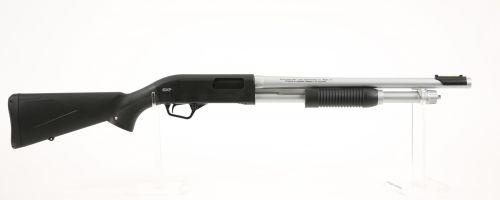
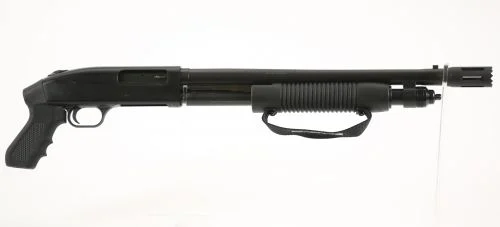
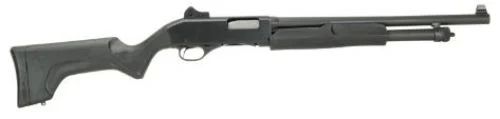
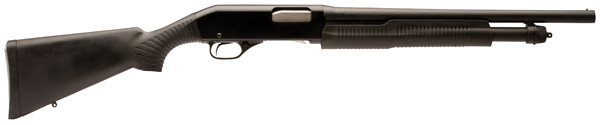
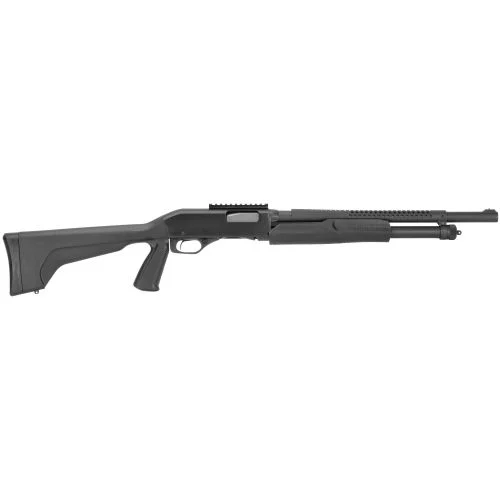
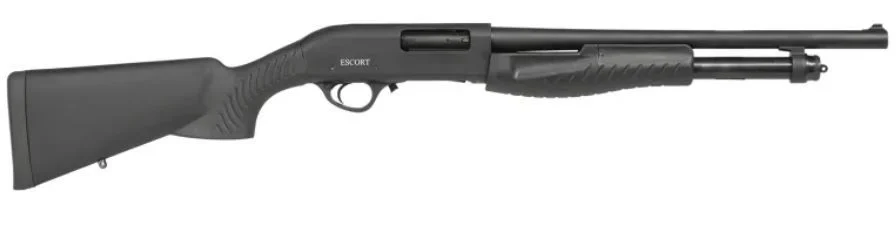
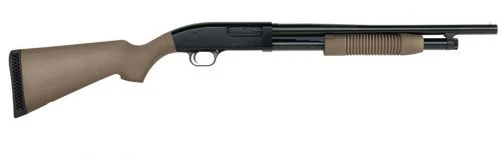
A pump-action 12-gauge with an 18.5 to 20 inch barrel is the standard answer, and it has earned that. It is mechanically simple, works with any load, and costs less than any other serious defensive firearm. Its weaknesses are practical: it is long in a hallway, heavy for a small person, and the recoil means many owners never practise. Deal with those directly. Have the stock shortened if it does not fit, mount a light on the fore-end or the magazine tube, and shoot it until working the action is automatic. Choose buckshot, and pattern it at the longest distance inside your home.
A 20-gauge pump is a real option, not a compromise. We list conventional pump and plain semi-automatic shotguns. Models sold as tactical, with folding stocks or pistol-grip-only stocks, are filtered out of the Maryland catalog.
Lever-action and pistol-calibre carbines
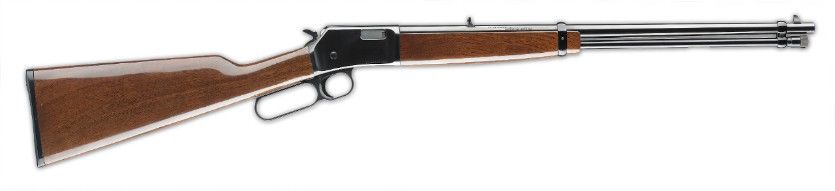
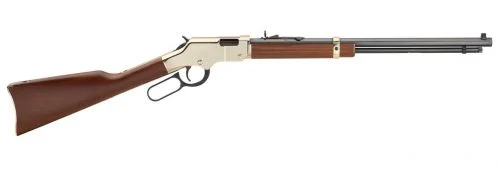
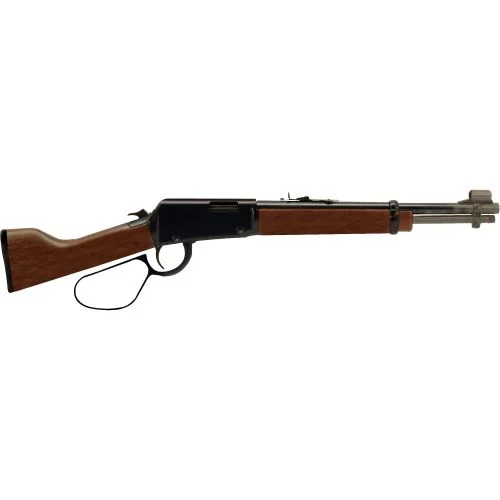
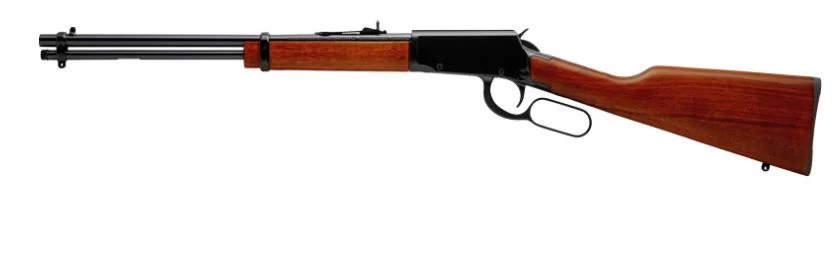
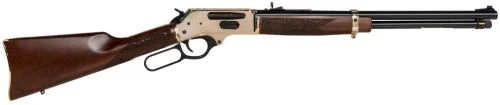
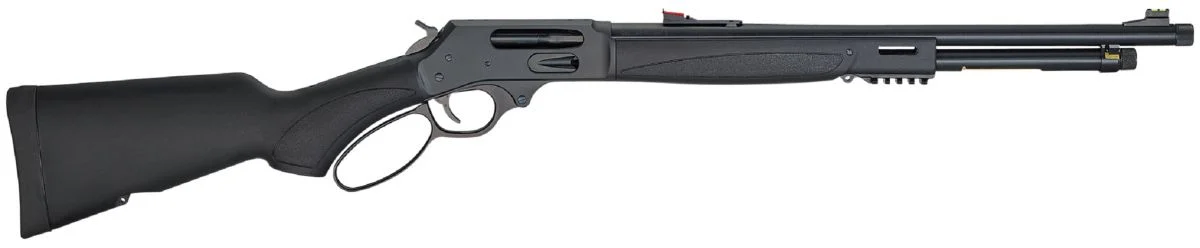
A lever-action carbine in .357 Magnum or .44 Magnum is the least appreciated home defense gun in restrictive states. It is short, weighs about six pounds, recoils gently, holds eight to ten rounds in a fixed tube and points naturally. A .357 lever gun also fires cheap .38 Special for practice. Anyone who can work a lever can run one after an afternoon at the range. Where the catalog has them, they are worth a look alongside the shotguns.
Semi-automatic pistol-calibre carbines are a harder case. Several popular models appear on Maryland's list of banned firearms or meet the copycat definition, and our filter removes anything it cannot clear. If a carbine is not shown on this site, take that as the answer for ordering from us.
What Maryland law says about defending your home
Maryland has no stand-your-ground statute. Self-defense is governed by court decisions. Outside the home there is generally a duty to retreat before using deadly force if you can do so in safety. Inside your own home the courts do not require you to retreat, which is the so-called castle doctrine, but the other conditions still apply: you must not be the aggressor, you must actually and reasonably believe you face imminent death or serious bodily harm, and the force must be no more than the threat requires. Deadly force is not justified simply to protect property. Courts and Judicial Proceedings Article § 5-808 provides limited civil immunity to a person who uses force against someone who unlawfully entered their dwelling or business.
General information, not legal advice. The outcome of a real case depends on details that a web page cannot cover. A Maryland attorney is the right person to ask, and it is better to ask before you ever need to.
Storage: § 4-104
Criminal Law Article § 4-104, strengthened in 2023, makes it a crime to store or leave a firearm in a place where you know or should know an unsupervised minor could gain access to it. Read the statute for its definitions and exceptions. In practice, a home defense long gun in Maryland lives in a quick-access safe or a locking wall rack, not behind the bedroom door. That also protects you from theft, and from liability if someone who is prohibited from having firearms lives in or visits the house.
Light, plan, practice
- Put a light on the gun. You must identify what you are pointing at, and most break-ins that matter happen in the dark.
- Decide the plan now. Where the family gathers, who calls 911, which directions are safe to shoot. In a rowhouse or apartment, that last point decides everything.
- Practise the dull parts. Loading, unloading, clearing a short-stroked pump, and moving with a long gun through a doorway.
- Transport it legally. To and from the range, the gun travels unloaded and cased (Natural Resources Article § 10-410).
What to shop